
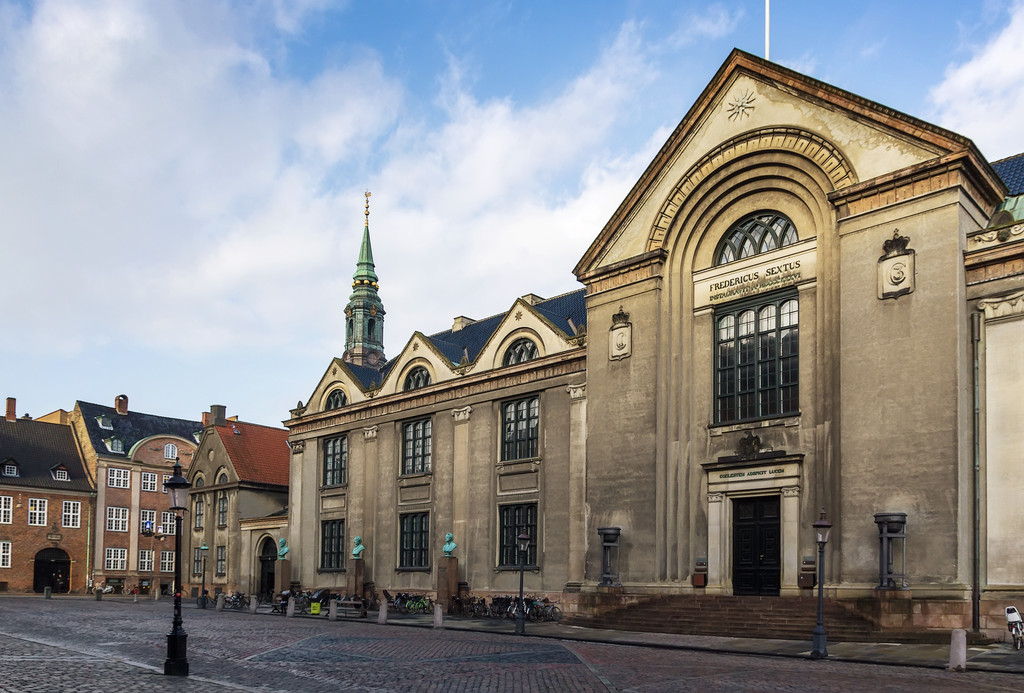
丹麦哥本哈根大学博士后职位招聘–实验电化学和材料科学
Department of Chemistry
Faculty of Science
University of Copenhagen
The Department of Chemistry invites applicants for a 2-year postdoc position in electrochemical preparation of copper-based alloys and multimetallic nanostructured catalysts for the electrochemical oxidation of biomass-derived molecules. This project is part of the research project entitled “Electrosynthesis of model Nanocatalysts for the production of renewable chemicals (EleNa)” which is financed by the Villum foundation and led by Assistant Professor Paula Sebastián Pascual.
The start date of the position is the 1 December 2023 or as soon as possible thereafter. The position is initially offered for 2 years.
The project
Electrochemical conversion of carbon dioxide (CO2) into liquid fuels and chemicals can be a solution for a long-term storage of renewable energy. In a carbon dioxide (CO2) conversion electrolyser, the CO2 molecules are reduced at the cathode, and water is oxidized to oxygen at the anode. However, the water oxidation or oxygen evolution reaction (OER) requires high applied overpotentials, reducing the energy efficiency of the electrolyser. Alternatively, the oxidation of organic molecules derived from biomass consumes less energy than the OER and generates industrially valuable chemicals. This project aims to prepare copper-based alloys and multimetallic nanostructured catalysts for the electrochemical oxidation of biomass-derived molecules such as furfural and under conditions of CO2 electrolysis.
We are part of the Nano-Science Center and the Center of High Entropy Alloy Catalysis (CHEAC) at the Chemistry Department of the University of Copenhagen (UCPH). Our research project is highly interdisciplinary, and you will collaborate with other groups within the Chemistry Department and with international collaborators.
Your tasks
The candidate will electrochemically prepare nanostructured catalysts with tailored structures and compositions using different electrolytes and bath compositions. The candidate will combine classical electrochemical methods (e.g., cyclic voltammetry) with ex-situ electron microscopy and x-ray spectroscopy techniques to characterize the nanocatalysts.
The candidate will combine in-situ electrochemical methods and product detection techniques, such as gas chromatography-mass spectrometry (GC-MS) technique and high-performance liquid chromatography (HPLC), to address reaction mechanisms. The prepared nanocatalysts will be also compared with extended surfaces and well-ordered single crystalline electrodes in order to find the structure-performance relations of the nanocatalysts toward the oxidation reactions.
The candidate will also evaluate the stability of the nanocatalysts under reaction conditions using in-situ operando synchrotron techniques. This study aims to understand how the changes in surface structure and composition, under different potential conditions, affect product selectivity and performance of the reactions.
You will participate in regular laboratory tasks within the research group as part of the normal daily activities in a team-driven laboratory environment. You will co-supervise master and Ph.D. students. You will participate in national and international conferences and write manuscripts.
Your profile
- You preferably hold a Ph.D. degree in experimental Electrochemistry and Material Science. You have experience in preparing nanomaterials by different methods.
- Experience with ex-situ electron microscopy and X-ray spectroscopy techniques to characterize nanostructures or nanoparticles.
- Experience with product detection techniques such as GC-MS and HPLC.
- Experience with in-situ operando and synchrotron techniques for the characterization of electrocatalyst structures under reaction conditions will be considered.
- Experimental experience in assessing the electrochemical behaviour of single crystalline electrodes and extended surfaces will be considered.
- You are cooperative, communicative, self-motivated, and high quality-oriented.
- Excellent language and communication skills in English.
what do we offer?
We are a young group with experimental experience in Electrochemistry. Our research uses electrochemical methods to prepare nanostructured catalysts with variable surface structure and composition. We focus on assessing how different aqueous and non-aqueous solvents, such as ionic liquids, affect both the first stages and the growth of the electrodeposited nanostructures. We also perform experimental studies on extended and well-defined surfaces, such as single crystalline electrodes, to rationally assess how the surface orientation and active site geometry influence the product selectivity and activity in electrocatalysis. You can find more information at: Nanostructure electrodeposition and electrocatalysis – Pascual group – University of Copenhagen (ku.dk) .
At the electrochemistry laboratory, we have equipment for electrochemical materials preparation and electrochemical in-situ characterization. Facilities at both UCPH include spectroscopic techniques, electron microscopies, gas chromatography-mass spectrometry (GC-MS), high-performance liquid chromatography (HPLC), inductively coupled plasma optical emission spectrometer (ICP-OES) and computational methods.
Further information on the Department is linked at https://www.science.ku.dk/english/about-the-faculty/organisation/ . Inquiries about the position can be made to Paula Sebastián Pascual: paula.pascual@chem.ku.dk
The position is open from 1 December 2023or as soon as possible thereafter.